Pool safety with AI
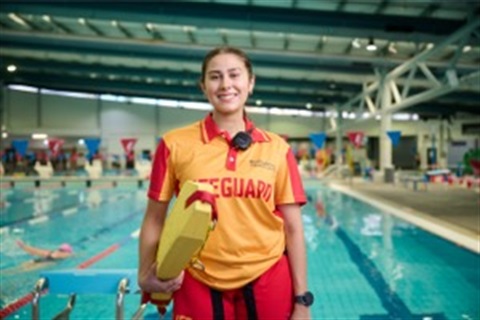
At MAC the safety of our members and visitors is paramount and now AI powered drowning prevention technology, Lynxight, is assisting our lifeguards to keep everyone safe.
The technology alerts our lifeguards to potential incidents taking place in our pools in real time.
Where a potential incident is identified by the technology, it sends an alert to a smart watch worn by our lifeguards, enabling them to attend and assess the situation fast.
The technology has the ability to detect if a person is:
- Showing early signs of distress, such as bobbing up and down trying to catch a breath
- Motionless and submerged underwater
- Floating and motionless.
The AI technology enhances our lifeguards ability to respond to potential incidents fast.
More Information
Below you will find questions and the answers in relation to the AI drowning prevention software.
What is Lynxight?
Lynxight is an AI tool that assists lifeguards at the MAC to detect potential drowning incidents quickly.
Why does MAC use an AI drowning prevention application?
While the MAC is very proud of the high standard of service provided by its lifeguards on duty, it is not possible for lifeguards to constantly supervise all swimmers at all times. External factors such as glare, pool shape, movement of water and colour of swimwear may give rise to challenges for lifeguards in identifying a potential drowning incident.
Lynxight helps support lifeguards by detecting potential drowning incidents using AI technology and notifying lifeguards in real time. Lifeguards can then attend to the situation as required.
The Royal Life Saving Society of Australia has entered into a strategic collaboration with Lynxight focusing on strengthening drowning prevention and safety at Australian aquatic facilities.
How does it work?
The primary purpose of the technology is to detect and prevent drowning incidents in real time. It works in conjunction with lifeguards to enhance our ability to detect drowning incidents.
Camera footage
Footage from cameras erected above the pools is encrypted on a local server in Victoria while being analysed by the technology in real time. The footage is only kept if an alert is sent (see below), in which case it is kept for 7 days before being deleted.
Alert to lifeguard’s smartwatch
An alert is sent to the lifeguard’s smartwatch indicating the loation of the incident and a low-resolution image of the swimmer in trouble. The lifeguard will attend the location and assess the situation.
Designated Safety Events
An alert is sent where one of three designated safety events occurs.
Instinctive Drowning Response (IDR)
A person shows early signs of distress, such as bobbing up and down trying to get a breath. This alert can take up to 35 seconds of the pattern being displayed before it is triggered.
Submersion
A swimmer is motionless and submerged underwater for 15–25 seconds before a safety event is triggered.
Floating
The system detects a swimmer who is floating and motionless for 25–35 seconds before a safety event is triggered.
What information does Lynxight collect?
Cameras are fixed high above the pools, at a minimum height of 4 metres to a maximum height of 10 metres.
No sensitive, biometric or health information is collected. The technology does not use facial recognition.
Can I decline to be captured by the Lynxight technology?
No. The safety of our members, visitors and staff is paramount and this technology enhances the abilities of our lifesavers to attend to potential incidents quickly.
Will the information be disclosed to anybody else?
No unless required to do so by law. Any personal information captured by Lynxight will only be used for the purpose of drowning detection. No personal information is captured by Lynxight.
If you have any questions about the technical functionality of Lynxight, please contact any of our friendly staff at the MAC.
If your questions relate to any personal information captured by Lynxight, including if you would like to access any information collected by Lynxight that is in Council’s possession, please contact Council’s Privacy Officer.