Environmental Programs for Schools
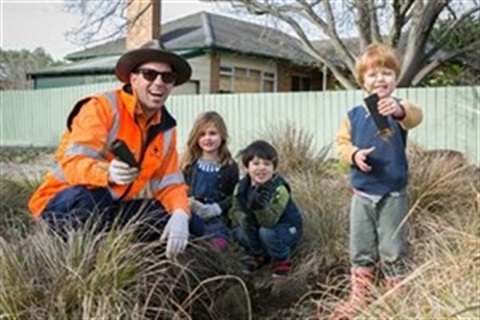
Council funds a range of engaging environmental workshops and activities for schools and childcare facilities in the City of Maribyrnong.
Students will learn about actions that we can all take to avoid waste, care for our waterways and reduce our impact on the climate.
A list of activities and workshops are provided below, including recommended year levels.
Programs and bookings
Maribyrnong City Council have partnered with The CERES School of Nature and Climate to facilitate incursion at schools and early years' centres on a range of sustainability topics. With four decades of experiences in providing hands on, curriculum linked programs, bring memorable experiences to your students.
To make a booking you must select a minimum of two 45-minute workshops from the list below. These workshops can run as back-to-back sessions for different classes.
You will need to provide three dates to ensure your booking can be secured on an appropriate date.
Book here
Incursions for Early Years programs
Please select 'other' in the school name dropdown menu
Farm to Fork
Children will meet soil superheroes (worms), discover the magic of germination through Seed Yoga, and plant a seasonal seed to take home or continue to grow at your Centre.
Learning Outcomes
● Children understand where their food comes from
● Children will learn how to plant seeds, and grow their own edible plant
● Understand food is something grown from the Earth or comes from an animal
● Identify and apply what an edible plant needs to grow into something they can eat – sunlight, healthy soil, water, time, care
● Meet soil superheros – worms!
Wildlife Shelters and Habitat
Children will explore the needs of wildlife through a fun and interactive habitat game, followed by a hands-on activity where they create an insect hotel to enhance habitats in their urban environment.
Learning Outcomes:
● Understand the basic needs of most wildlife – food, water, shelter
● Explore and identify local ecosystems & habitat
● Identify, collect, and build what local wildlife need for a suitable place to live
Incursions for Primary Schools
Farming for our Future
Program overview
Join our expert educators and explore how we can all (young and old!) contribute to growing a sustainable food system. Discover the world living under our feet and how growing our own food can connect us to a healthy self, community and planet.
Our educators will guide students through problem solving and action planning to create change within their school community and explore solutions to increase local food production at school or home.
Key questions for students to consider:
F-Y2 What role do worms and mini-beasts play in our soils? What would our planet look like without them? How does a seed turn into a plant?
Y3-6 What role does soil pay in sustainable farming practices? How can we improve soil health on our farms, and in our schools?
Through this interactive incursion your students will:
Years F-2
- Meet and greet a worm and discover the vital role they play in creating healthy, nutrient rich soil
- Learn about the life cycle of a plant through mindful seed yoga movements
- Get hands dirty whilst learning the skill of sowing and caring for seeds – perfect opportunity to bulk up an edible school garden
Years 3 – 6
- Discover the importance of healthy soil and why it’s the foundation of sustainable farming practices
- Explore the life within the soil including worms and decomposers and how they form the soil food web
- Get your hand dirty whilst learning the skill of sowing and caring for seeds – perfect opportunity to improve the soil quality in your school garden
You’ll receive a school teacher guide, including instructions for optional activities to do before and after the CERES incursion to get your students thinking, discussing and actively contributing to a world that is environmentally sustainable for all living creatures.
Learning outcomes
Years F – 2
- Understand how to grow food sustainably and the meaning of ‘organic’ in regards to farming
- Students discuss the relationship between farming and the environment, and how CERES Honey Lane Farm benefits nature
- Students investigate how living thins grow and change using plants as an example
Years 3 – 6
- Students understand different ways of farming and why different methods of farming can support or hinder natural cycles
- Students identify the role that soil plays in the growing of plants and why supporting healthy soil helps support local food systems
- Students will explore the steps needed to bring life to and care for seeds
Restoring Earth's Ecosystems
Program overview
Hosted by expert educators, students will develop their understanding of living and non-living things and the impacts of human activities on an ecosystem through hands-on activities.
Our educators will guide students through problem solving and action planning to create change within their school community and explore solutions to increase biodiversity at school or home.
Key questions for students to consider:
F-Y2: How are ecosystem, biodiversity and habitat connected? Why are non-living elements of an ecosystem important? What can we do to improve ecosystem health?
Y3-6: What do Ecosystems need to be healthy? How do humans impact habitat health? What is the role of the community in keeping local ecosystems healthy?
Through a variety of hands-on activities your students will:
Years F – 2
- explore what an animal needs in its environment to survive
- investigate the elements of a healthy ecosystem
- consider how humans can care for local ecosystems
Years 3 – 6
- learn about and identify elements of a healthy ecosystem for a variety of organisms
- consider how living things are connected within an ecosystem
- explore how human impacts on ecosystems are affecting individual animal species
- consider how humans can care for local ecosystems, habitats and organisms
You’ll receive a school teacher guide, including instructions for optional activities to do before and after the CERES incursion to get your students thinking, discussing and actively contributing to a world that is environmentally sustainable for all living creatures.
Learning outcomes
Years F – 2
- Students can identify living and non-living things in an ecosystem
- Students can identify what an animal needs in their habitat to survive
- Students consider how humans can impact local ecosystems
- Students develop an action plan to increase habitat and food resources within their school while assisting to increase biodiversity in the local area – completed after the incursion with the school teacher
Years 3 – 6
- Students can identify living and nonliving things in an ecosystem
- Students can identify the various connections between animals and plants including connections of food, shelter, pollination and fertilisation
- Students understand the threats facing the fauna in their local area to consider possible protective actions
- Students develop an action plan to increase habitat and food resources within their school while assisting to increase biodiversity in the local area – completed after the incursion with the school teacher
Tackling Climate Change
Program overview
Join our expert educators to understand the connection between energy production and climate change.
Students will discover how electricity is generated, understand the impacts it has on climate change and the important role renewable energy plays, and discuss political and social solutions (systems change) to increase agency and empowerment in students.
Key questions for students to consider:
How is electricity generated? What are the causes and effects of climate change? How can we contribute to a more sustainable and just world?
Through a variety of hands-on activities your students will:
Years 3-6
- Discover how the Project Drawdown transport solutions can help create ecological, livable cities supported by sustainable transport.
- Connect to Earth’s natural resources and nature’s cycles as they understand how transport is a major contributor to climate change and global warming.
- Learn new skills to guide their actions, including:
- Understand the difference between a combustion engine and an electric engine
- Analyse different types of transport and their effect on the environment
Years 7-10
- Discover the Project Drawdown solutions framework and how it is a template to mitigate and reverse the effects of climate change.
- Connect to Earth’s natural resources and nature’s cycles as they understand how human activities and behaviours have created a global environmental tipping point.
- Learn new skills to guide their actions that can help restore natural systems, including:
- Analyse climate change solutions
- Connect environmental issues to social and political issues
You’ll receive a school teacher guide, including instructions for optional activities to do before and after the CERES incursion to get your students thinking, discussing and actively contributing to a world that is environmentally sustainable for all living creatures.
Learning outcomes
Years 3-6
- Students understand that internal combustion engines are the leading cause of global transport emissions and that electric vehicles (EVs) are a sustainable alternative.
- Students explore sustainable transport solutions and how they can be applied to their local communities to help lower greenhouse gas emissions.
Years 7-10
- Students understand that we rely on ecosystems for everything; they are part of them and their activities can affect how it functions, and its ability to recover from damage.
- Students explore solutions to the climate crisis by investigating climate solutions in the Project Drawdown solutions framework.
Towards Zero Waste
Program overview
Hosted by our expert educators, students will understand landfill as a problem that contributes to pollution and waste: a take-make-dispose model. Through identifying different waste materials, their long lasting effects on our environment, and the bins they belong in, students will develop skills to apply the “6 R’s” in their school community to move towards zero waste and resource recovery.
Key questions for students to consider:
F-2: How does waste contribute to pollution? What does ‘Zero Waste’ mean? How do the 6R’s help us take care of the planet and people?
Y3-6: How does waste contribute to climate change? How can we turn waste into a valuable resource? How does moving toward zero waste benefit the well-being of the planet and people?
Learning outcomes
Years F-6
- Students understand waste as a problem that needs to be avoided to address pollution and natural resource use
- Students will learn ways to avoid waste and respect the earths’ natural resources through natures’ cycles & the 6 Rs
- RETHINK, REFUSE, REDUCE, REUSE, RECYCLE, ROT
Incursions for Secondary Schools
Tackling Climate Change (years 7-8)
Students explore electricity production impacts on climate change, and consider alternate ways that people can contribute to a sustainable future. They learn about systemic change concepts and ways to advocate for a just and healthy planet.
Learning Outcomes
● Explain what climate change is and the effects it has on our environment
● Identify the major global systems that are contributing to climate change
● Discuss actions they can take on an individual level to create positive futures and how this ties into collective action
● Students can generate unique solutions to questions related to current energy practices in Australia
New workshop for Early Years during Term 2, 2026!
Textile Upcycling: Block Print Gift Wraps
Children will immerse themselves in the craft of block printing — a rhythmic, tactile process that transforms reclaimed fabric into something beautifully new. Perfect for curious creators aged 3 and up, this is a hands-on session where little and big hands alike can explore the magic of print and pattern.
Guided by upcycling artists from A Fitting Connection, they’ll discover how simple prints can breathe new life into worn textiles, turning them into expressive, reusable gift wraps.
Along the way, we'll explore the story behind the fabrics we use — chatting about textile waste, where our clothes and materials come from, and how choosing to reuse and recycle can make a real difference to our planet. These are big ideas, and we love sharing them in ways that make sense to every age in the room.
We will also discover the gentle art of fabric wrapping — an elegant, waste-free alternative to paper and tape that children can take home and use again and again.
All materials are provided.
Enquire about a session
Recycling with Mondo - Textile recycling and fundraising program
Recycle With Mondo is a free textile recycling and fundraising program for primary school students. Schools that collect old clothing, textiles and electronic items can receive a payment per kilogram, with items collected by Southern Cross Recycling.
Schools can select Designated Collection Days or opt to have Clothing Drop-Off Hubs installed at the school. Collection Days earn .25c per kilo of items collected and Drop-Off Hubs earn .10c per kilo of items collected.
In addition to collections, schools can also book educational talks, and students are provided with Sustainability Calculators so that they can track the real-time impact their efforts are achieving in waste, water, energy and greenhouse gas savings.
Find out more about the program
Victorian Schools Garden Program
The Victorian Schools Garden Program is now offering Victorian primary schools the opportunity to have a free garden incursion at their school.
There are six garden incursion topics for schools to apply for. The incursion is free of charge; however, some materials or resources will be required for the school to provide. Find out more about each topic and grade suitability below.
3 Ways to Start a Garden
Suitable for Year 2 – Year 6 students.
There are many ways to start a garden. In this session, we will learn 3 very easy and effective ways of getting a garden going in your school. Students will split into 3 groups and each group will learn in detail about a method of growing – from seed, from cutting and from root stock. To finish off, each student will make a wicking pot, which they will plant with some seeds to watch as it grows.
Compost
Suitable for Year 2 – Year 6 students.
There are many ways to compost, it can be done in many shapes and sizes. They all have something in common though… creating amazingness, from waste. In this session we will delve into a few ways which would be most suited for the home and school yard.
From Garden to Kitchen
Suitable for Year 2 – Year 6 students.
Explore and learn how to start a garden from things in the home kitchen. Very few people realise this, but we can start growing plants from food waste. Old potatoes, spring onion scraps, pumpkin seeds, celery offcuts, coriander seeds, sprouted sweet potatoes – from old food, we can grow new food!
Garden Rejuvenation
Suitable for Year 4 – Year 6 students.
Nearly every school has a garden, and many of these gardens are neglected. In this session we will be looking at how you can rejuvenate your garden spaces with a very simple method – No dig gardening or lasagne gardening. Who doesn’t love a good lasagne? Well, this lasagne isn’t your average one! It’s a garden bed layered with lots of different things to make your soil zing. Your school gardens will be humming along in no time.
Gardening for Insects
Suitable for Year 2 – Year 6 students.
In this session we will look into good insects and not so great insects. Some insects we love in our gardens, while others are not so welcome. In this session we will talk about companion planting in gardens and how it can help bring in good insects and repel the not-so-great ones. We will then plant some plants in your school garden that will bring in some good insects.
Worms in Schools
Suitable for Year 2 – Year 6 students.
Worms are amazing waste disposal units; they can eat their own body weight a day in organic matter! In this session, we will be looking into usual school-yard waste and the problems associated with it. We will then explore how you can dramatically reduce your school waste, save money for your school, create nutritious plant food and become the proud owners of thousands of amazing animals: Worms!
To learn more about what VSGP offers, or to register for a free garden incursion, visit the Victorian Schools Garden Program's website.